
If you’ve been dealing with persistent bloating, unpredictable digestion, or suspected SIBO, you’ve probably found yourself standing in the grocery store feeling completely overwhelmed. What used to be a simple shopping trip has become a maze of confusion—you’re Googling “what can I eat with SIBO” in the produce aisle, reading labels obsessively, and second-guessing every item in your cart.
Maybe you’ve tried eliminating foods randomly, only to feel just as bloated. Perhaps you’ve cut out gluten and dairy but still can’t figure out why a “healthy” salad leaves you uncomfortable for hours. You might be afraid to eat anything at all, worried that every meal will trigger symptoms you can’t predict or control.
This is where a structured Low FODMAP approach can help. Rather than guessing which foods might trigger your symptoms, a Low FODMAP grocery list gives you a clear starting framework—foods that are less likely to cause fermentation and gas production in a sensitive gut.
This isn’t about restrictive eating forever. It’s about creating a simple, repeatable structure that may help calm symptoms while you address underlying issues. Think of it as a reset that gives your gut some breathing room.
Table of Contents
ToggleWhat Is a Low FODMAP Grocery List?
A Low FODMAP grocery list is a curated collection of foods that are lower in fermentable carbohydrates—the types of carbs that bacteria in your gut ferment, producing gas and triggering symptoms like bloating, pain, and changes in bowel movements.
What FODMAP Actually Means
FODMAP stands for Fermentable Oligosaccharides, Disaccharides, Monosaccharides, and Polyols. These are short-chain carbohydrates found in many everyday foods. In a healthy gut, these carbs eventually reach the colon where beneficial bacteria ferment them. But when you have SIBO or a sensitive gut, bacteria in the small intestine ferment these carbs prematurely, creating uncomfortable symptoms.
Why Certain Foods Ferment More Than Others
Not all carbohydrates ferment equally. Foods high in FODMAPs contain specific sugars and fibers that are particularly attractive to bacteria. When you temporarily reduce these high-FODMAP foods, you’re essentially limiting the fuel available for fermentation, which may help calm bloating, gas, and digestive discomfort.
Why This Matters for SIBO
When bacteria are overgrown in your small intestine, they ferment food before your body can properly digest and absorb it. A Low FODMAP grocery list helps you choose foods that produce less fermentation, potentially reducing the gas and bloating that make SIBO so uncomfortable.
This isn’t a cure for SIBO—it’s symptom management while you work on addressing the bacterial overgrowth itself. But for many people, having a structured list of SIBO safe foods makes a significant difference in day-to-day comfort.
Core Low FODMAP Grocery List for Beginners
Building your Low FODMAP grocery list doesn’t have to be complicated. Focus on these foundational foods to create simple, satisfying meals that are less likely to trigger symptoms.
Proteins
Most animal proteins are naturally low in FODMAPs and well-tolerated:
- Eggs (all preparations)
- Chicken (breast, thighs, ground)
- Turkey (ground turkey, turkey breast)
- Salmon (fresh or canned)
- White fish (cod, halibut, tilapia)
- Beef (ground beef, steak)
- Pork (pork chops, tenderloin)
- Shrimp and other shellfish
Avoid breaded or heavily marinated proteins, as coatings and sauces often contain high-FODMAP ingredients like garlic or onion powder.
Vegetables
Many vegetables are Low FODMAP in appropriate portions:
- Zucchini
- Spinach
- Kale
- Carrots
- Bell peppers (moderate portions)
- Cucumber
- Tomatoes
- Green beans
- Bok choy
- Lettuce (butter lettuce, romaine)
- Eggplant
Remember that portion sizes matter with some vegetables. A small serving might be fine, while a large serving could trigger symptoms.
Fruits (Portion Mindful)
While many fruits are high in FODMAPs, several are well-tolerated in moderate amounts:
- Strawberries (up to 10 medium)
- Blueberries (about 1/4 cup)
- Kiwi (1 medium)
- Oranges (1 medium)
- Cantaloupe (small portions)
- Grapes (about 10)
- Banana (firm, not overripe)
Portion control is especially important with fruit. Even Low FODMAP fruits can become high-FODMAP in larger quantities.
Carbohydrates
Low FODMAP carb options provide energy without excessive fermentation:
- White rice
- Brown rice
- Quinoa (up to 1 cup cooked)
- Potatoes (white, red, Yukon gold)
- Oats (up to 1/2 cup)
- Gluten-free bread or pasta (check ingredients)
- Sourdough spelt bread (fermentation reduces FODMAPs)
- Rice cakes
Fats and Oils
Most fats are Low FODMAP and essential for satisfaction and nutrient absorption:
- Olive oil
- Coconut oil
- Avocado oil
- Butter or ghee
- Garlic-infused oil (garlic pieces must be removed)
- Avocado (limit to 1/8 of a whole fruit)
Dairy and Alternatives
Choose lactose-free or low-lactose options:
- Hard cheeses (cheddar, parmesan, Swiss)
- Lactose-free milk
- Almond milk (unsweetened, check for additives)
- Coconut milk (canned, no guar gum)
Pantry Basics and Seasonings
Since garlic and onion are off the table, these become essential:
- Sea salt
- Black pepper
- Fresh herbs (basil, cilantro, parsley, rosemary)
- Ginger (fresh or ground)
- Turmeric
- Cumin
- Lemon and lime
- Chives (green part only)
- Chicken or vegetable broth (low-FODMAP varieties)
7 Day Low FODMAP Meal Plan Overview
This simple meal plan uses the Low FODMAP grocery list above to create straightforward, repeatable meals. The focus is on simplicity and symptom relief, not gourmet cooking.
Day 1
Breakfast: Scrambled eggs with spinach, cooked in olive oil
Lunch: Grilled chicken breast with white rice and steamed carrots
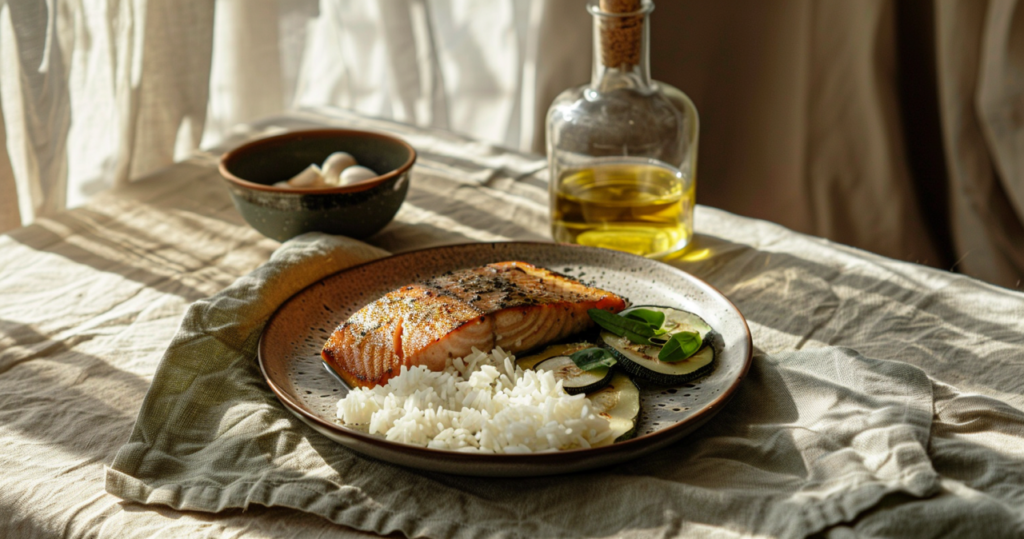
Dinner: Baked salmon with roasted zucchini and a small baked potato
Day 2
Breakfast: Oatmeal (1/2 cup) topped with strawberries and a drizzle of almond butter
Lunch: Turkey lettuce wraps with cucumber and bell pepper slices
Dinner: Ground beef stir-fry with bok choy, carrots, and white rice
Day 3
Breakfast: Two hard-boiled eggs with a side of cherry tomatoes
Lunch: Leftover ground beef stir-fry from dinner
Dinner: Grilled chicken thighs with quinoa (moderate portion) and green beans
Day 4
Breakfast: Smoothie with lactose-free milk, spinach, 1/4 cup blueberries, and protein powder (check ingredients)
Lunch: Salmon salad with mixed greens, cucumber, and olive oil dressing
Dinner: Baked cod with roasted bell peppers and white rice
Day 5
Breakfast: Scrambled eggs with tomatoes and fresh basil
Lunch: Chicken and vegetable soup (using low-FODMAP broth, carrots, zucchini, spinach)
Dinner: Turkey burger (no bun, or gluten-free bun) with lettuce, tomato, and roasted potatoes
Day 6
Breakfast: Rice cakes with almond butter and sliced strawberries
Lunch: Leftover turkey burger with a side salad
Dinner: Shrimp stir-fry with zucchini, bell peppers, and brown rice
Day 7
Breakfast: Omelette with spinach, tomatoes, and cheddar cheese
Lunch: Grilled salmon with quinoa and steamed green beans
Dinner: Chicken breast with mashed potatoes (made with lactose-free milk and butter) and roasted carrots
Snack Ideas
- Hard-boiled eggs
- Rice cakes with peanut butter
- Small handful of strawberries
- Lactose-free yogurt (if tolerated)
- Carrots with olive oil and sea salt
- Small portion of cheese
This meal plan is intentionally simple and repeatable. You can prep components in batches (like cooking rice, grilling chicken, or hard-boiling eggs) to make daily assembly easier.
Foods to Avoid on Low FODMAP
While the focus should be on what you can eat, understanding common high-FODMAP foods helps you navigate grocery shopping and restaurant menus.
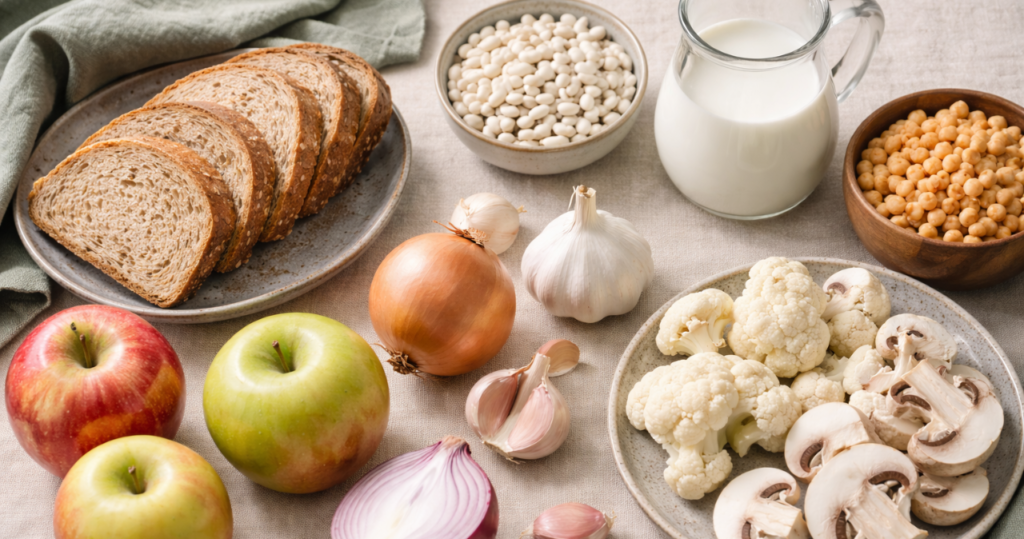
Common High-FODMAP Foods
High in fructans:
- Garlic
- Onion
- Wheat, rye, barley
- Cashews and pistachios
High in GOS:
- Beans and lentils
- Chickpeas
High in lactose:
- Milk
- Soft cheeses
- Yogurt
- Ice cream
High in excess fructose:
- Apples
- Pears
- Honey
- Mango
- High-fructose corn syrup
High in polyols:
- Cauliflower
- Mushrooms
- Stone fruits (peaches, plums, cherries)
- Sugar alcohols (sorbitol, mannitol, xylitol)
This isn’t about creating fear around these foods. Many of them are nutritious and will likely be reintroduced later. For now, temporarily reducing them may help you identify which specific FODMAPs trigger your symptoms.
Common Beginner Mistakes with Low FODMAP
Understanding where people typically struggle can help you avoid unnecessary setbacks and approach Low FODMAP more sustainably.
Cutting Out Too Much
Some people eliminate not just high-FODMAP foods but also entire food groups or create additional restrictions out of fear. This can lead to nutritional deficiencies, disordered eating patterns, and unnecessary stress. Stick to reducing high-FODMAP foods rather than eliminating everything that might theoretically cause issues.
Staying Low FODMAP Too Long
The Low FODMAP diet was designed to be temporary—typically 2-6 weeks for the elimination phase. Staying on a restrictive diet indefinitely can reduce microbiome diversity and create an unhealthy relationship with food. The goal is to identify your triggers through systematic reintroduction, not to restrict forever.
Ignoring Root Causes
Low FODMAP helps manage symptoms, but it doesn’t address why you have SIBO or gut dysfunction in the first place. If you’re not also working on things like motility support, stress management, stomach acid optimization, or antimicrobial protocols (if appropriate), you’re only addressing part of the picture.
Skipping Reintroduction
Many people get stuck in the elimination phase because it feels “safe.” But the reintroduction phase is where you gain personalized information about your triggers. Without it, you’re left guessing forever about what you can actually tolerate.
Forgetting That Portions Matter
With FODMAPs, dose matters. A small amount of avocado might be fine, while half an avocado triggers symptoms. A few cashews might be tolerable, while a handful isn’t. Learning your personal thresholds requires attention during the reintroduction phase.
Not Working with a Practitioner
While you can educate yourself about Low FODMAP, working with a registered dietitian or practitioner experienced in SIBO and digestive health ensures you’re implementing the approach safely and effectively. They can help prevent common mistakes and support you through the reintroduction process.
When to Expand Beyond Low FODMAP
Low FODMAP is a valuable tool for symptom management, but it’s just one piece of a comprehensive approach to gut healing. Once you’ve identified your triggers and achieved some symptom relief, the next step is gradually expanding your diet and addressing underlying issues.
The Reintroduction Phase
After 2-6 weeks on Low FODMAP, you’ll begin systematically testing high-FODMAP foods one at a time to see which ones you actually react to. This process takes several weeks and provides invaluable information about your unique gut.
You might discover you tolerate lactose perfectly fine but struggle with fructans. Or you might handle polyols well but react to GOS. This personalized data allows you to create a long-term diet that’s as varied as possible while avoiding your specific triggers.
Pairing Diet with Treatment
If you have confirmed SIBO, Low FODMAP should ideally be used alongside antimicrobial treatment (herbal or pharmaceutical), motility support, and root cause investigation. Diet alone doesn’t eliminate bacterial overgrowth—it just makes living with it more comfortable.
For a comprehensive understanding of how Low FODMAP fits into the bigger picture of SIBO management, including antimicrobial protocols, motility support, and the rebuild phase, our Low FODMAP for SIBO beginner’s reset guide walks through the complete process from elimination to reintroduction.
Rebuilding Diversity
Once you’ve addressed the bacterial overgrowth and completed reintroduction testing, the focus shifts to rebuilding microbiome diversity. This means gradually expanding food variety, potentially including prebiotics and probiotics (under practitioner guidance), and eating a wide range of colorful vegetables, resistant starches, and fermented foods as tolerated.
The goal is to move from restriction to sustainable abundance—eating the widest variety of foods your gut can handle comfortably.
Starting Your Low FODMAP Journey
A Low FODMAP grocery list takes the guesswork out of meal planning when your gut feels unpredictable and overwhelming. By focusing on foods that are less likely to ferment and trigger symptoms, you create structure and calm during a confusing time.
This 7-day meal plan gives you a simple starting point—basic, repeatable meals using accessible ingredients. You don’t need elaborate recipes or hard-to-find specialty items. You need clarity, simplicity, and a framework that helps you feel more in control.
Remember that Low FODMAP is a temporary reset, not a permanent way of eating. The goal is to calm symptoms, identify your specific triggers through reintroduction, and gradually expand your diet again as your gut heals.
If you’re looking for a downloadable PDF version of this meal plan with shopping lists and prep tips, we’ve created a simple 7-day reset guide that takes the thinking out of your week. And for those who want deeper context on how Low FODMAP fits into comprehensive SIBO treatment, our foundational guide on testing, treatment options, and recovery provides the bigger picture.
Your gut has an incredible capacity to heal when given the right support. A structured Low FODMAP approach can be one piece of that healing journey.
If you found this guide helpful, we’d love for you to share it with someone who might be struggling with similar symptoms. For more practical support on your SIBO journey, explore our Low FODMAP meal plans and gut-healing recipes. You can also follow us on PINTEREST for daily tips, real-talk about gut health, and a community that gets it.
Disclaimer: We are not licensed medical professionals. The information shared here reflects personal healing experience and educational research. Always consult a qualified healthcare provider before making medical decisions.